
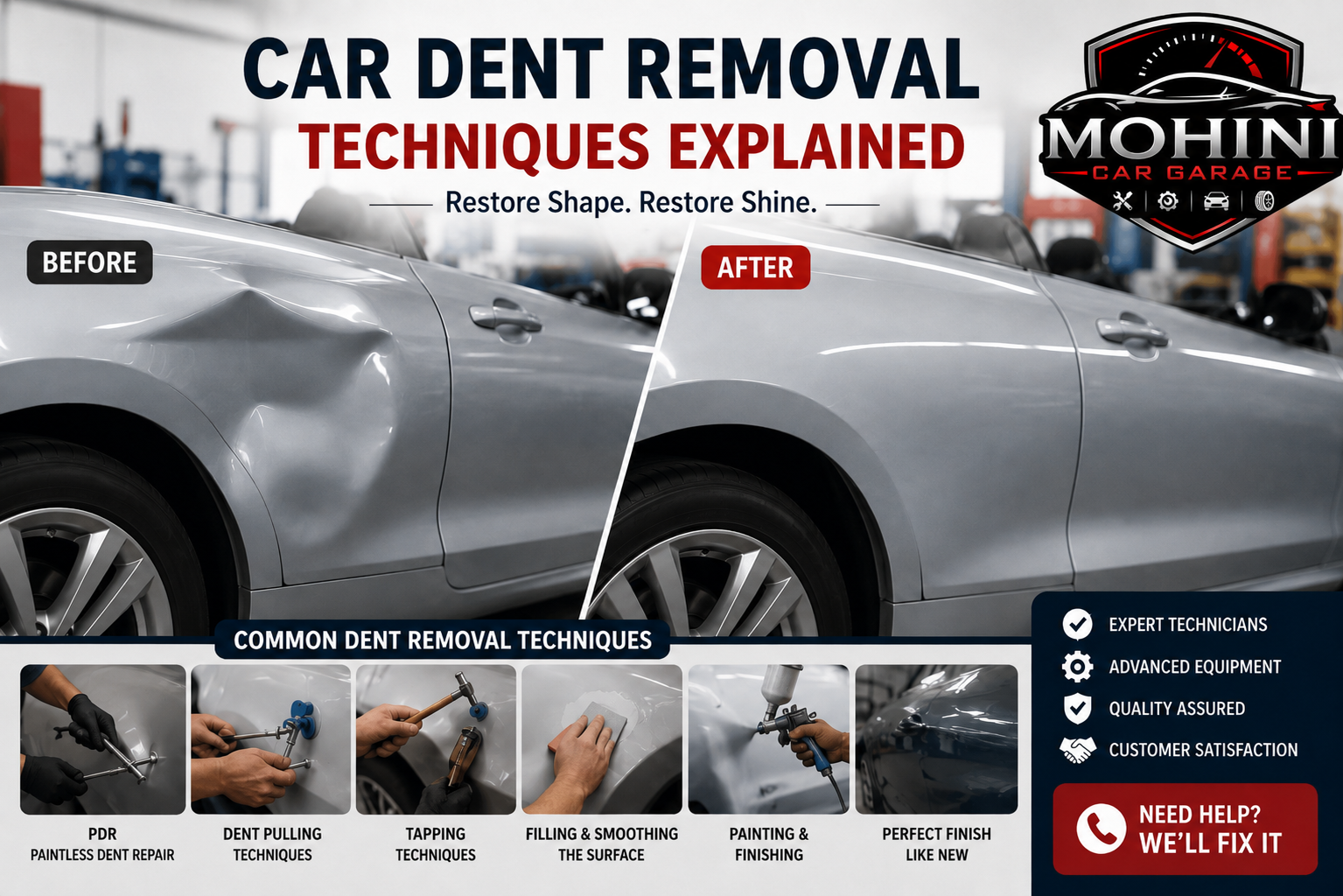
Car dents are one of the most common problems vehicle owners face. Even a small dent can affect the appearance of your car and reduce its resale value. Dents can happen due to minor accidents, parking mistakes, hailstorms, road debris, or accidental impacts. While some dents may appear minor, ignoring them can lead to paint damage, rust formation, and expensive repairs in the future.
Understanding different car dent removal techniques helps car owners choose the right repair method based on the size, depth, and location of the dent. In this blog, we will explain the most effective dent repair methods, their benefits, and when professional repair becomes necessary.
What Causes Car Dents?
Car dents can occur during daily driving and parking situations. Some dents only affect the outer surface, while others may damage the paint and internal body panel.
Common Causes of Car Dents
- Minor road accidents
- Parking collisions
- Hailstorm damage
- Falling objects
- Door impacts in parking areas
- Road debris and stones
Moreover, crowded parking spaces and careless driving significantly increase the chances of dent damage.
Why Should Car Dents Be Repaired Quickly?
Many vehicle owners ignore small dents because the car still functions properly. However, delaying repairs can create bigger problems over time.
Problems Caused by Ignoring Dents
- Paint damage and rust formation
- Reduced resale value
- Poor vehicle appearance
- Increased repair costs later
- Weakening of body panels
In addition, dents with damaged paint expose the metal surface to moisture, which may lead to corrosion and long-term structural damage.
Different Types of Car Dents
Before selecting a repair method, it is important to understand the type of dent affecting your vehicle.
1. Minor Dents
Minor dents are small surface damages without paint cracks. These dents are usually easier and quicker to repair.
2. Sharp Dents
Sharp dents have deep impact points and often require professional dent repair tools and repainting.
3. Crease Dents
Crease dents form long lines or folds on the body panel and are more difficult to repair compared to round dents.
4. Round Dents
Round dents are commonly caused by balls, stones, or minor impacts and are often suitable for Paintless Dent Repair.
Paintless Dent Repair (PDR)
Paintless Dent Repair, also known as PDR, is one of the most advanced and popular dent removal techniques used today. This method repairs dents without affecting the original paint of the vehicle.
How Paintless Dent Repair Works
Specialized tools are used to gently push or pull the dented metal back into its original shape from behind the body panel.
Benefits of Paintless Dent Repair
- Preserves original factory paint
- Faster repair process
- More affordable than repainting
- Eco-friendly repair solution
- Maintains vehicle resale value
Best Suitable For
- Small dents
- Hail damage
- Minor parking dents
- Dents without paint cracks
However, Paintless Dent Repair may not work effectively on deep dents or areas with severe paint damage.
Traditional Dent Repair Method
Traditional dent repair is commonly used when the dent is large or the paint surface is damaged.
How Traditional Dent Repair Works
The damaged panel is repaired using body filler, sanding, surface preparation, and repainting to restore the original appearance of the vehicle.
When Traditional Dent Repair Is Needed
- Deep dents
- Paint scratches or cracks
- Major collision damage
- Sharp body panel creases
Advantages of Traditional Dent Repair
- Repairs severe damage effectively
- Restores original body shape
- Suitable for almost all dent types
Although this process takes more time, it provides excellent results for major damage.
Dent Pulling Technique
Dent pulling is another common repair method used for medium-sized dents.
How Dent Pulling Works
Special pulling tools or suction devices are attached to the dented surface to pull the metal outward carefully.
Suitable For
- Medium dents
- Flat surface damage
- Minor collision dents
This method is often combined with refinishing techniques for better results.
Heat and Cold Dent Removal Technique
Some minor dents can be repaired using heat and cold methods.
How It Works
The dented area is heated and then rapidly cooled. This sudden temperature change may help the metal return to its original position.
Advantages
- Quick repair method
- Low-cost solution
- Useful for small dents
However, this method may not work on every dent type and should be handled carefully to avoid paint damage.
Suction Dent Removal Method
Suction tools are commonly used for shallow dents on flat surfaces.
How Suction Dent Removal Works
A suction cup creates pressure on the dented area and pulls the surface outward.
Best Suitable For
- Small dents
- Flat panels
- Minor parking damage
Although simple, this technique is usually less effective on deep or sharp dents.
Body Filler Repair Technique
When dents are too severe for Paintless Dent Repair, body filler is commonly used.
Process of Body Filler Repair
- Damaged area is sanded
- Body filler is applied
- Surface is reshaped and smoothed
- Panel is repainted
Suitable For
- Large dents
- Severe body damage
- Dents with paint removal
This repair technique helps restore the vehicle’s appearance professionally.
Factors That Affect Dent Repair Cost
The cost of dent repair depends on several important factors.
Main Factors Include
- Size of the dent
- Depth of the damage
- Paint condition
- Dent location
- Repair method used
- Vehicle model and body type
Moreover, luxury vehicles may require specialized dent repair procedures, which can increase repair costs.
Why Professional Dent Repair Is Important
Some car owners attempt DIY dent removal methods, but improper techniques may worsen the damage.
Benefits of Professional Dent Repair
- Proper tools and equipment
- Accurate repair techniques
- Better finish quality
- Protection of original paint
- Long-lasting repair results
Professional technicians can also identify hidden internal damage behind the body panels.
Tips to Prevent Car Dents
While dents cannot always be avoided, certain precautions can reduce the risk significantly.
Useful Prevention Tips
- Park carefully in open spaces
- Avoid parking too close to other vehicles
- Drive cautiously on narrow roads
- Use covered parking during hailstorms
- Maintain safe driving distance
In addition, installing parking sensors and rear cameras can help prevent accidental impacts.
When Should You Visit a Dent Repair Expert?
You should seek professional dent repair services if:
- The dent affects the paint surface
- Rust begins to appear
- The dent is deep or sharp
- Multiple dents are visible
- DIY methods do not work properly
Ignoring body damage for too long may increase repair costs and reduce the lifespan of your vehicle’s body panels.
Conclusion
Car dents are common, but the right repair method can restore your vehicle’s appearance effectively. Techniques such as Paintless Dent Repair, traditional dent repair, suction pulling, and body filler repairs are widely used depending on the severity of the damage.
Therefore, understanding different car dent removal techniques helps you make better repair decisions and maintain your vehicle’s value. Timely inspection and professional repair also help prevent long-term body damage and rust formation.
If you are looking for professional dent repair services, Mohini Car Garage offers reliable car denting and painting solutions with experienced technicians and quality workmanship.
FAQs
1. What is the best method for small car dents?
Paintless Dent Repair is considered one of the best methods for small dents without paint damage.
2. Can all dents be repaired without repainting?
No, deep dents or dents with cracked paint usually require repainting and traditional dent repair methods.
3. Is Paintless Dent Repair expensive?
PDR is generally more affordable than traditional dent repair because it does not require repainting.
4. How long does dent repair take?
Minor dents may be repaired within a few hours, while severe dents may take several days.
5. Can DIY dent removal damage my car?
Yes, improper DIY methods can worsen the dent or damage the paint surface further.