A properly working car AC is essential for comfortable driving, especially during hot summer days. When your car AC stops cooling properly, even short journeys can become uncomfortable. Many car owners ignore minor AC problems in the beginning, but these issues can turn into expensive repairs later.
Understanding the real reason behind poor AC cooling helps you take the right action at the right time. In this blog, we will explain the most common causes of car AC problems, warning signs to watch for, and practical solutions to improve cooling performance.
Why Is Your Car AC Not Cooling Properly?
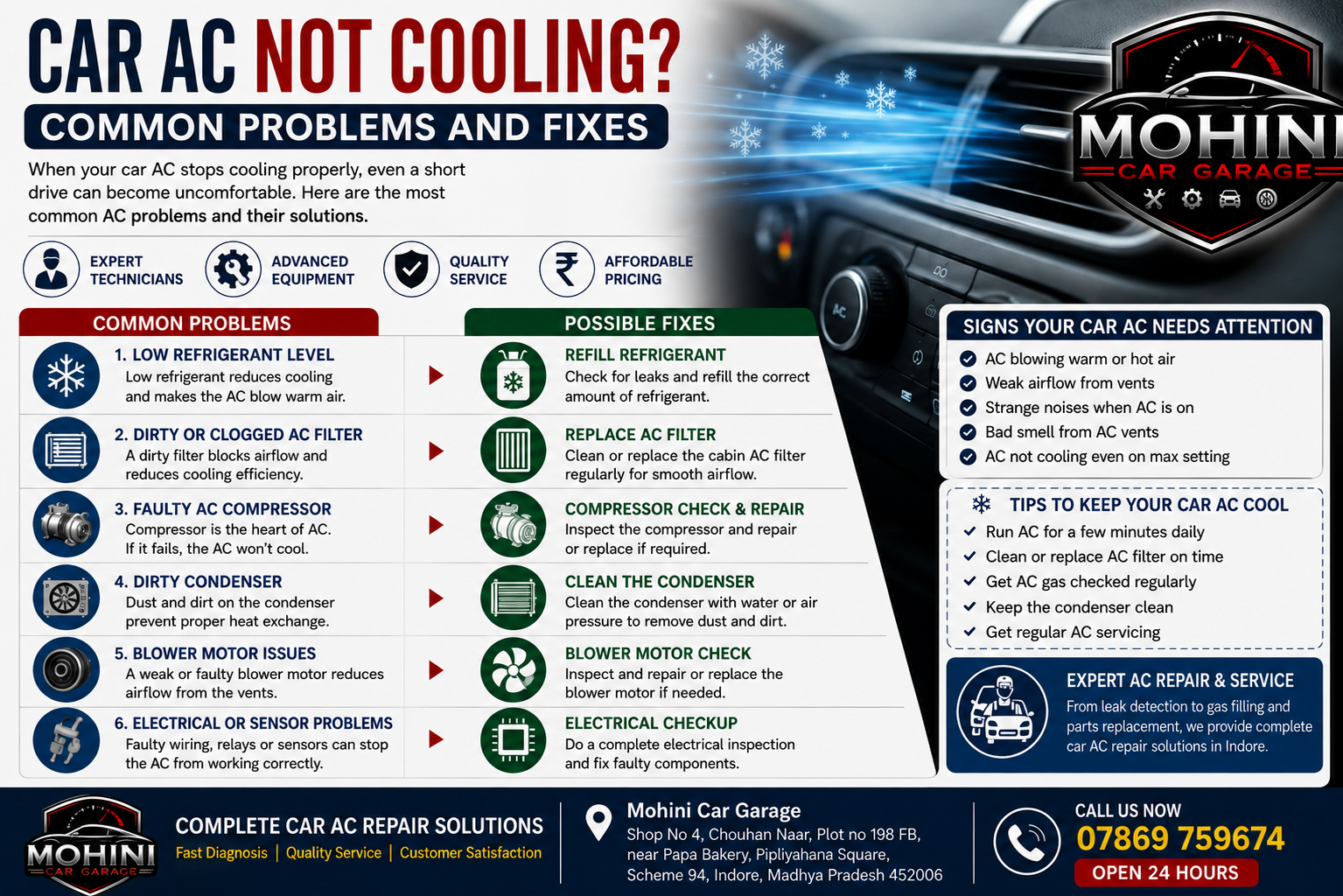
A car air conditioning system works through several important components such as the compressor, condenser, refrigerant gas, cooling fan, filters, and electrical systems. If any part stops functioning correctly, cooling performance decreases significantly.
Common Reasons Behind Poor Car AC Cooling
- Low AC gas or refrigerant leakage
- Compressor failure
- Dirty cabin air filter
- Condenser blockage
- Faulty cooling fan
- Electrical issues in the AC system
- Lack of regular AC maintenance
However, many drivers continue using the AC without checking the actual issue, which may damage other components as well.
Common Signs of Car AC Problems
Your vehicle usually shows warning signs before the AC completely stops working. Therefore, identifying these symptoms early can help prevent costly repairs.
1. Weak Airflow from AC Vents
If the airflow feels weak even at maximum fan speed, the cabin air filter or blower motor may be blocked or damaged.
2. Warm Air Instead of Cold Air
One of the most common complaints is that the AC blows warm air instead of cool air. This often happens due to low refrigerant gas or compressor issues.
3. Unusual Noises from the AC System
Grinding, squealing, or clicking sounds may indicate compressor damage or loose AC components.
4. Bad Smell Inside the Car
A foul smell from the AC vents usually occurs because of dirt, bacteria, or moisture buildup inside the AC system.
5. Water Leakage Inside the Cabin
Blocked drain pipes may cause water leakage near the passenger-side floor area.
In addition, some vehicles may show fluctuating cooling performance during long drives or heavy traffic conditions.
Low Refrigerant Gas – A Common Cause of Poor Cooling
Refrigerant gas is responsible for cooling the air inside your vehicle. Over time, small leaks may reduce gas levels, which directly affects cooling performance.
Symptoms of Low Refrigerant Gas
- AC takes longer to cool
- Cooling becomes weaker over time
- Compressor repeatedly switches on and off
- Warm air from the vents
Moreover, driving with low refrigerant gas can put extra pressure on the AC compressor.
Fix for Low Refrigerant Gas
A professional technician first checks the AC system for leakage. After repairing the leak, the refrigerant gas is refilled to the recommended level.
Simply refilling gas without repairing the leak may only solve the issue temporarily.
Car AC Compressor Problems
The compressor is considered the heart of the car AC system. It circulates refrigerant throughout the system and maintains proper cooling.
Common Compressor Issues
- Compressor clutch failure
- Internal compressor wear and tear
- Low lubrication
- Electrical malfunction
If the compressor fails, the entire AC system may stop cooling properly.
Signs of Compressor Failure
- Loud noise while the AC is running
- AC cooling suddenly stops
- Compressor not engaging
- Reduced cooling efficiency
Therefore, compressor issues should never be ignored.
Dirty Cabin Air Filter
The cabin air filter prevents dust and pollutants from entering the car interior. However, over time, dirt accumulation blocks airflow.
Effects of a Dirty Cabin Filter
- Weak airflow from vents
- Dusty smell inside the cabin
- Reduced cooling performance
- Increased pressure on the blower motor
Solution
Replacing the cabin air filter during routine servicing improves airflow and enhances cooling efficiency.
Condenser Blockage and Cooling Problems
The condenser removes heat from the refrigerant. If it gets clogged with dirt or debris, the AC cannot release heat properly.
Causes of Condenser Problems
- Mud and dust buildup
- Damaged condenser fins
- Blocked airflow due to debris
Fix
Professional condenser cleaning or replacement may be required depending on the condition.
Moreover, keeping the front grille area clean helps improve condenser performance.
Cooling Fan Failure
The cooling fan supports the condenser by maintaining proper airflow. If the fan stops working, the AC may cool poorly, especially when the vehicle is stationary.
Symptoms of Cooling Fan Problems
- AC cools while driving but not in traffic
- Engine temperature rises
- Cooling drops at low speed
Repair Solution
The fan motor, relay, or wiring may require repair or replacement.
Electrical Issues in Car AC Systems
Modern vehicles depend heavily on electrical systems. Even a small electrical fault can affect AC performance.
Common Electrical Problems
- Blown fuse
- Faulty relay
- Sensor malfunction
- Damaged wiring
Electrical diagnosis helps identify the exact issue quickly and prevents unnecessary replacement of parts.
Why Regular Car AC Service Is Important
Many vehicle owners delay AC servicing until the cooling completely stops. However, regular maintenance improves performance and reduces repair costs.
Benefits of Regular Car AC Service
- Better cooling performance
- Improved fuel efficiency
- Longer compressor life
- Cleaner air inside the cabin
- Early detection of leaks and damage
In addition, regular servicing helps maintain overall driving comfort during summer.
Simple Tips to Maintain Your Car AC
Taking proper care of your AC system can prevent major breakdowns and improve cooling efficiency.
Useful Car AC Maintenance Tips
- Run the AC regularly, even during winter
- Replace cabin filters on time
- Keep the condenser area clean
- Avoid ignoring unusual noises
- Check refrigerant levels periodically
- Get professional AC servicing done regularly
These small maintenance habits can significantly increase the lifespan of your car AC system.
When Should You Visit a Car AC Repair Expert?
You should seek professional inspection if:
- The AC is not cooling properly
- Cooling becomes inconsistent
- Strange noises appear from the AC system
- Water leakage is visible inside the cabin
- The AC starts producing foul smells
Ignoring these signs may lead to expensive repairs later.
Conclusion
A properly functioning car AC is essential for comfortable and stress-free driving. Problems such as low refrigerant gas, compressor failure, dirty filters, cooling fan issues, and electrical faults are some of the most common reasons behind poor AC cooling.
Therefore, regular maintenance and timely repairs are important to keep your car AC system working efficiently. If your car AC is not cooling properly, getting it checked early can save both time and repair costs.
For professional car AC repair and maintenance services, you can visit Mohini Car Garage for expert inspection, AC gas refilling, compressor repair, and complete car servicing solutions.
FAQs
1. Why is my car AC blowing hot air?
This usually happens because of low refrigerant gas, compressor problems, or electrical faults in the AC system.
2. How often should car AC servicing be done?
Experts generally recommend servicing the car AC at least once a year for better cooling performance.
3. Can a dirty air filter reduce AC cooling?
Yes, a clogged cabin filter blocks airflow and affects the overall cooling efficiency inside the vehicle.
4. What are the signs of a bad AC compressor?
Common signs include loud noises, poor cooling, compressor clutch issues, and inconsistent AC performance.
5. Is AC gas refilling enough to solve cooling issues?
Not always. If there is a leak in the system, the leak must be repaired before refilling the refrigerant gas.