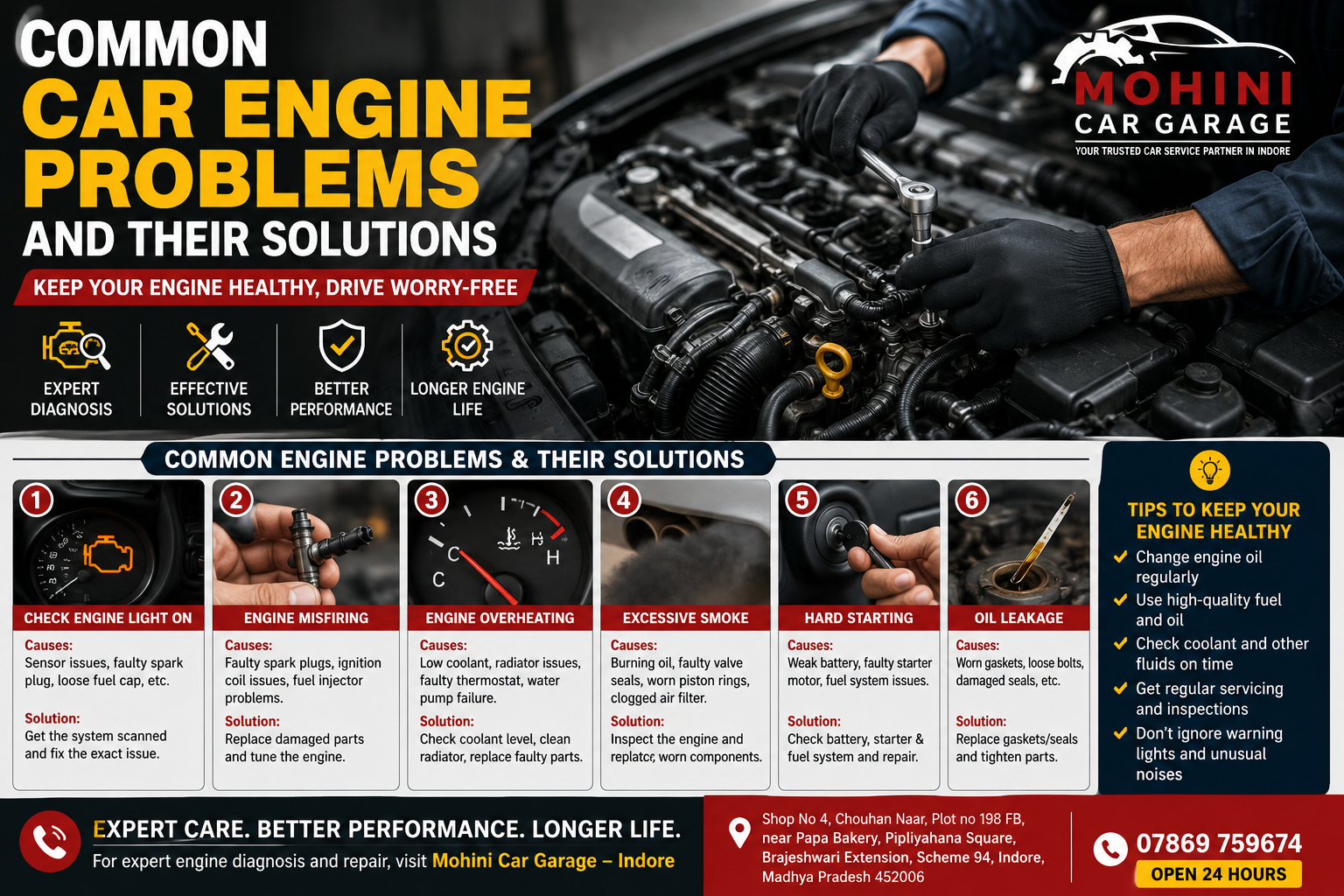
The engine is one of the most important parts of any vehicle. A healthy engine ensures smooth driving, better fuel efficiency, and long-term performance. However, many car owners experience engine-related issues due to poor maintenance, overheating, or delayed servicing.
Understanding common car engine problems can help you identify warning signs early and avoid costly repairs. In this blog, we will explain the most common engine problems, their causes, and practical solutions to keep your vehicle running properly.
Why Do Car Engine Problems Happen?
Modern car engines are designed to perform efficiently for years. However, regular wear and tear, poor maintenance habits, and driving conditions can affect engine performance over time.
Some common reasons behind engine problems include:
- Lack of regular servicing
- Low engine oil levels
- Overheating issues
- Poor fuel quality
- Damaged spark plugs
- Battery or electrical problems
- Ignoring warning signs
Moreover, small issues that are ignored for a long time may lead to major engine damage.
Common Signs of Engine Problems
Your vehicle often shows warning signs before a serious engine failure occurs. Therefore, paying attention to these symptoms can help prevent expensive repairs.
Engine Warning Light Turns On
One of the most common indicators is the check engine light on the dashboard. This warning may appear because of sensor issues, fuel system problems, or engine malfunction.
Unusual Engine Noise
Knocking, grinding, or rattling sounds from the engine may indicate internal damage or low lubrication.
Excessive Smoke from Exhaust
Different smoke colors can indicate different issues:
- Black smoke – Fuel burning problem
- Blue smoke – Engine oil leakage
- White smoke – Coolant leakage or overheating
Poor Fuel Efficiency
If your car suddenly starts consuming more fuel than usual, there may be a problem with the fuel injection system, spark plugs, or engine tuning.
Difficulty Starting the Car
A weak battery, faulty starter motor, or fuel system issue can make it difficult to start the engine.
In addition, engine vibrations or sudden power loss should never be ignored.
Engine Overheating Problems
Overheating is one of the most common and dangerous engine problems. If ignored, it can severely damage engine components.
Causes of Engine Overheating
- Low coolant level
- Radiator blockage
- Faulty thermostat
- Cooling fan failure
- Water pump issues
Signs of Overheating
- Temperature gauge rising quickly
- Steam from the bonnet
- Burning smell from the engine area
- Reduced engine performance
Solution
The cooling system should be inspected immediately. Refilling coolant, repairing leaks, or replacing damaged cooling components can solve the issue.
Moreover, driving an overheated vehicle for a long time can lead to engine seizure.
Low Engine Oil and Lubrication Problems
Engine oil reduces friction between moving engine parts. Low oil levels can increase wear and tear inside the engine.
Symptoms of Low Engine Oil
- Engine noise increases
- Oil warning light appears
- Burning smell
- Reduced engine performance
Solution
Regularly checking and changing engine oil helps maintain proper lubrication and improves engine life.
Using the correct engine oil grade recommended by the manufacturer is also important.
Spark Plug Problems
Spark plugs ignite the fuel-air mixture inside the engine. Damaged or dirty spark plugs can affect engine performance.
Common Symptoms
- Engine misfiring
- Rough idling
- Poor fuel efficiency
- Difficulty starting the car
Solution
Replacing old spark plugs during regular maintenance improves engine performance and fuel efficiency.
Battery and Electrical Issues
Electrical problems can directly affect engine starting and vehicle performance.
Common Electrical Problems
- Weak battery
- Corroded battery terminals
- Alternator failure
- Damaged wiring
Signs of Battery Problems
- Slow engine crank
- Dashboard lights becoming dim
- Clicking sound while starting
Solution
Battery testing and electrical inspection help identify the exact issue quickly.
Fuel System Problems
The fuel system supplies fuel to the engine for combustion. If the fuel flow is interrupted, engine performance drops significantly.
Common Fuel System Issues
- Clogged fuel injectors
- Dirty fuel filter
- Fuel pump failure
- Poor fuel quality
Symptoms
- Engine hesitation
- Reduced acceleration
- Increased fuel consumption
- Engine stalling
Solution
Cleaning injectors, replacing fuel filters, and using quality fuel can improve performance.
Engine Misfiring Problems
Engine misfiring occurs when one or more cylinders fail to produce power properly.
Causes of Engine Misfire
- Faulty spark plugs
- Fuel injector problems
- Ignition coil damage
- Air-fuel imbalance
Signs of Engine Misfire
- Jerking while driving
- Engine vibration
- Reduced power
- Check engine light
Solution
A professional diagnosis helps identify the exact cause and prevents further engine damage.
Timing Belt Problems
The timing belt controls the synchronization between engine components. A damaged timing belt can cause serious engine failure.
Symptoms of Timing Belt Failure
- Ticking noise from the engine
- Engine misfire
- Difficulty starting
- Sudden engine shutdown
Solution
Replacing the timing belt at recommended intervals prevents costly engine repairs.
Why Regular Engine Maintenance Is Important
Many major engine failures happen because small issues are ignored for too long. Therefore, regular maintenance is essential for keeping the engine healthy.
Benefits of Regular Maintenance
- Better engine performance
- Improved fuel efficiency
- Longer engine life
- Lower repair costs
- Safer driving experience
In addition, timely servicing helps identify hidden problems before they become serious.
Tips to Keep Your Car Engine Healthy
Simple maintenance habits can significantly improve engine performance.
Useful Engine Care Tips
- Change engine oil regularly
- Check coolant levels frequently
- Avoid overheating
- Replace filters on time
- Use quality fuel
- Do not ignore warning lights
- Get regular engine inspections done
Following these steps helps reduce the risk of sudden breakdowns.
When Should You Visit a Car Repair Expert?
You should seek professional help if:
- The engine warning light stays on
- Unusual engine noises appear
- Smoke comes from the exhaust
- The engine overheats repeatedly
- Fuel efficiency drops suddenly
Ignoring these signs may lead to severe engine damage and expensive repairs later.
Conclusion
Car engine problems can affect your vehicle’s performance, fuel efficiency, and overall safety. Issues like overheating, low engine oil, spark plug failure, fuel system problems, and battery faults are some of the most common engine-related concerns faced by car owners.
However, regular servicing and timely repairs can help maintain engine performance and prevent major breakdowns. Understanding these common engine problems and their solutions allows you to take better care of your vehicle and enjoy a smoother driving experience.
FAQs
1. What is the most common engine problem in cars?
Engine overheating is one of the most common car engine problems and can occur due to coolant leakage or radiator issues.
2. Why is my check engine light on?
The check engine light may appear because of fuel system issues, sensor faults, ignition problems, or engine malfunction.
3. How often should engine oil be changed?
Most vehicles require an engine oil change every 5,000 to 10,000 kilometers depending on the vehicle type and oil quality.
4. Can low engine oil damage the engine?
Yes, low engine oil increases friction between engine parts and may lead to severe engine damage if ignored.
5. How can I improve my car engine performance?
Regular servicing, timely oil changes, proper coolant levels, and quality fuel help improve engine performance and efficiency.